 by
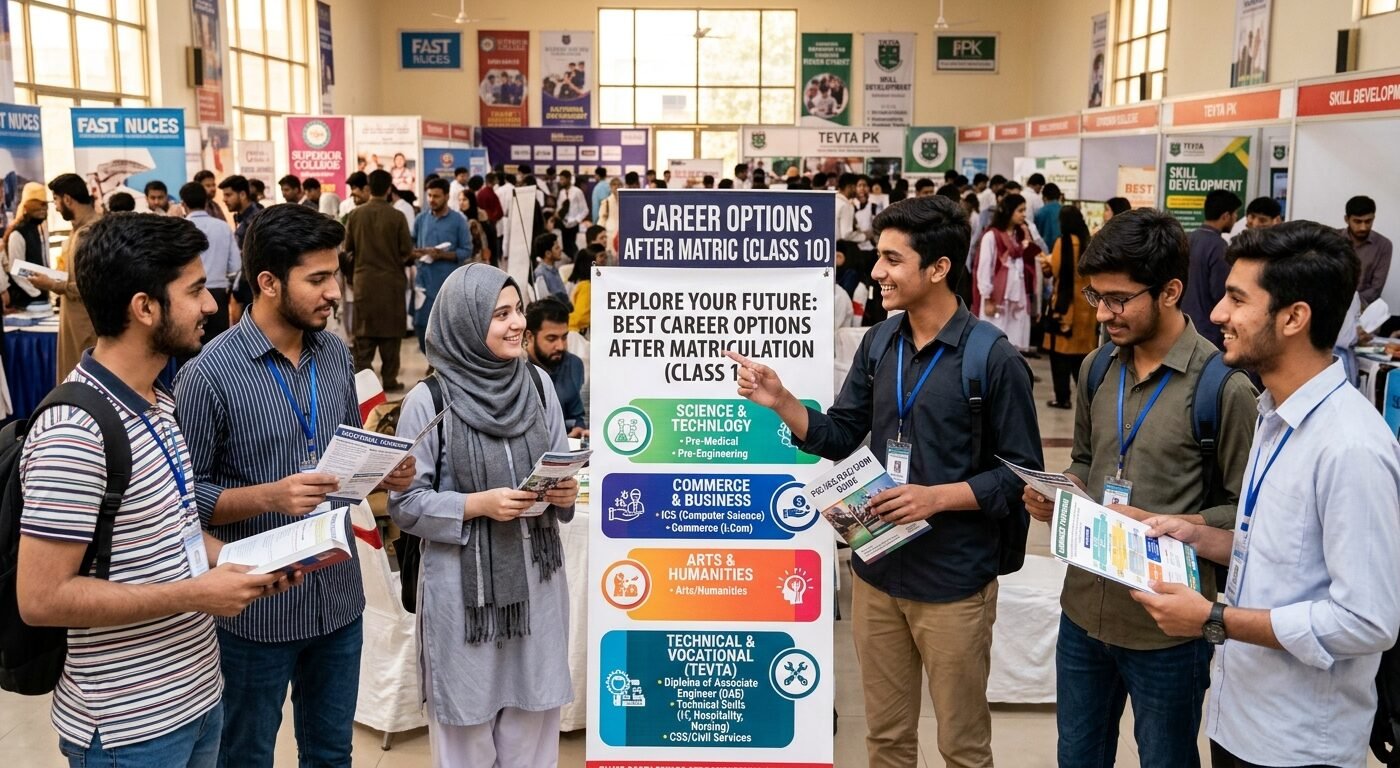
Choosing your career after finishing your matric is a very important decision to make. Many students often get confused as to which career paths and education options are best for them. Some students might want to pursue science while others might want to pursue commerce, computer science, technical or professional training.
The best career after your matric will depend on your interests, your grades, budget, and goals. Understanding your options will help you make an informed decision about your future. Choosing a suitable career will help you gain valuable skills, progress in your education and increase your chances of getting a job.
Below you will find a list of popular careers after your matric, along with some helpful tips.
Why Career Planning After Matric Is Important
Your matric is a very important year in your education, and the subjects you choose will impact your college education, your university acceptance and your career.
If you don’t plan properly you might choose a subject based off of pressure from your family, however it might not be something you’re interested in or good at!
Planning your career will help you to understand your strengths and weaknesses. It will also help you understand the requirements of your education, future career and how much it will cost.
Remember that there is no one ‘best’ career for everyone. Choosing the right career for you will help you to pursue your interests, realistic opportunities and goals.
Pre Medical
If you are interested in biology, human health and medical science then you might want to pursue the pre medical route.
This can help you to progress to studying medicine, dentistry, pharmacy, nursing and other medical related careers. Depending on the institution you choose, the requirements to get in might vary.
Many medical careers require several years of study. Getting into some of the most competitive courses might depend on your grades and entrance exams.
If you enjoy biology and want to help people then this could be a rewarding career. However, do your research into the requirements and options.
Pre Engineering
If you enjoy maths, physics and problem solving then pre engineering could be a good option for you.
This can help to prepare you for an engineering career such as civil engineering, electrical engineering, mechanical engineering and other technical careers. The subjects you’ll study and the requirements to get in will depend on your education board.
Engineering careers can involve designing buildings, creating machinery, improving electrical systems, keeping industrial machinery running etc.
If you enjoy maths and problem solving then this could be a good career for you. Do your research into the requirements to get into university and what qualifications you need for your desired engineering career.
Computer Science
If you enjoy computers, technology and problem solving then computer science could be a good option.
Depending on your institution, you might be able to study computer science subjects in your intermediate or complete an approved technical course. There are lots of careers in the computer industry including:
Software development Website development Computer networks Database management Cyber security IT support
You can also start learning some basic computer skills. This will help you in the future by teaching you some basic programming skills, office software and internet research.
However don’t assume that you’ll get a job just because you’ve done a short course. Usually, you’ll need practical experience, ongoing learning and problem solving skills to be successful.
Commerce
If you’re interested in accounting, business, finance, banking and management then this could be a good option for you.
You might want to complete some commerce related subjects in your intermediate or complete an approved qualification. Your future options might include:
Accounting Business Administration Economics Finance Marketing Entrepreneurship
You’ll benefit from learning some spreadsheet software, business communication, basic accounting and finance.
If you want to run your own business then business studies could be a good option for you. You’ll be introduced to budgeting, customer service, planning and decision making.
Technical/Vocational
If you enjoy practical learning then technical/vocational could be a good option. Depending on your location and requirements, you might want to do:
Electrical technology Mechanical Automotive Refrigeration & Air Conditioning Welding Computer Hardware etc.
These qualifications can help prepare you for jobs in workshops, factories, service companies, construction companies and maintenance departments.
Some students complete a vocational course because they want to get into the workforce with a practical qualification. They can continue to develop their skills.
Ensure the institution you’re going to is approved and that the qualification will be recognised by employers/licensing bodies.
Diploma Courses
There may be some diploma courses available in technical, business, computing and other professions.
A diploma can help you to gain specialised knowledge and practical skills. Some diplomas will allow you to progress onto further education while others will be more focused on getting you into the workforce. Consider:
How long the course runs for How much it will cost What subjects you’ll be learning Whether it’s recognised
Ensure that the qualification will meet the requirements of your desired university/profession.
Develop Your Digital Skills
Many careers will require you to have digital skills. Start by learning the basics of using a computer, word processing, spreadsheets, presentations, typing and online communication.
If you’re interested in creative careers then you could look into graphic design, video editing or website development. If you’re interested in technology then you could look into some basic programming or computer networks.
There are lots of resources online to help you develop your skills. Ensure you choose a reputable course and practice what you’ve learnt.
Creating a portfolio with real projects will help you to show off your skills when applying for internships/entry level roles.
How To Choose The Right Career After Matric
Start by identifying your interests. Think about what subjects you enjoy, what you’re good at and what sort of work you’d like to do.
Research the requirements for your desired careers. Consider the cost of tuition, how long the course runs for, what the entry requirements are and what jobs you could get.
Talk to your teachers, career advisor, professionals and family members.
Don’t choose a career just because it’s popular. Ensure you’re interested in the career and willing to develop the skills.
If you’re worried about the cost of education then look into scholarships, funding or affordable approved institutions.
Common Mistakes When Choosing A Career
Not knowing what subjects you need for the future. Following your friends into a certain subject.
Going for a career based on unrealistic promises. Research your career options using reliable sources. Remember that getting a job will depend on your qualifications, skills, experience and market.
Not considering technical/vocational options. While university can be very beneficial for many careers, some professions offer alternative training options.
Conclusion
The best careers after matric include science, computer science, commerce, technical, vocational and approved diploma courses. Each will offer different opportunities.
Carefully consider your interests, strengths, budget and goals. Ensure that you know the entry requirements and go to an approved institution.
By planning your future and continuing to develop your skills you’ll create a solid foundation for your higher education and future career.
For more career advice, education advice and tips for getting a job visit our site regularly at rozgarmila.com.