 by
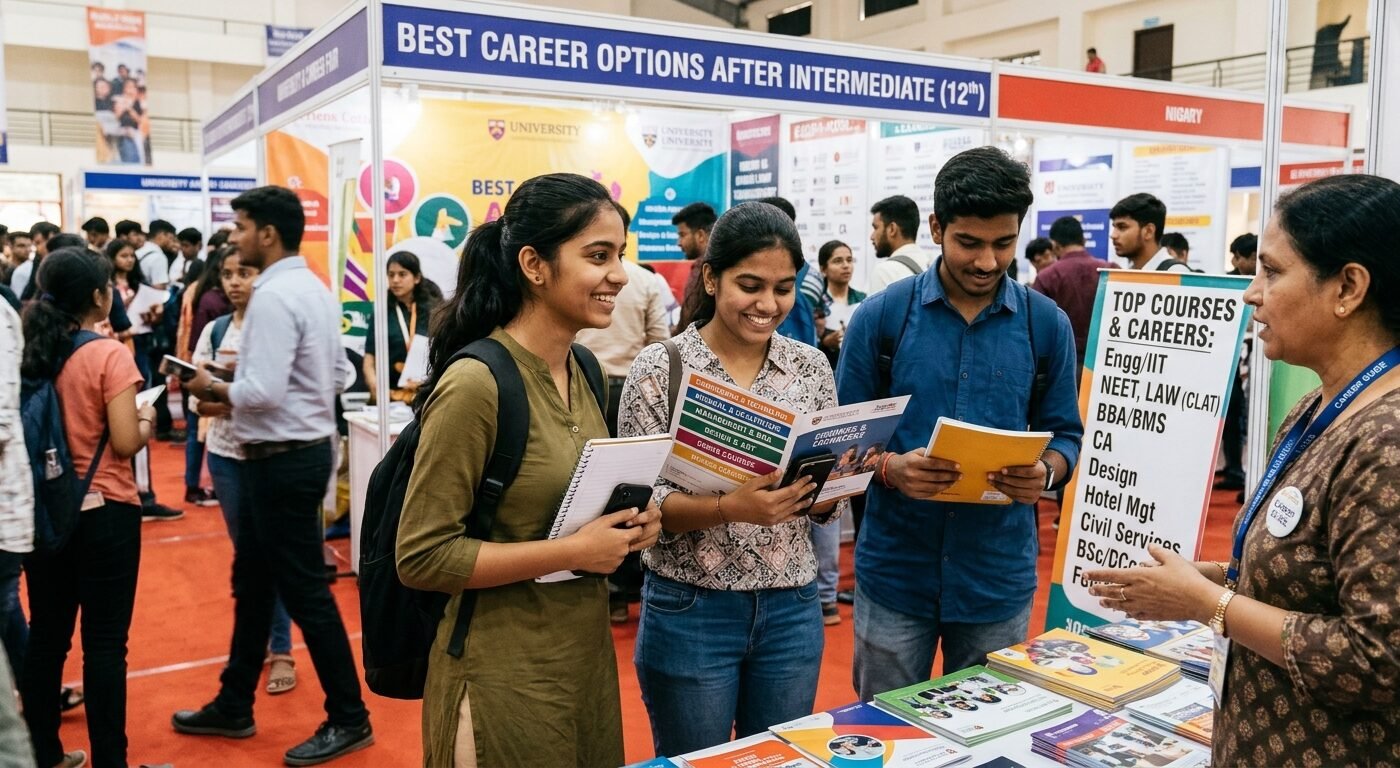
Making the best career choices after Intermediate is an important step for students. Students will often decide to go onto further study or professional training, gain practical skills or look for employment opportunities.
Career choice will depend on your subjects, interests, grades and budget. Some students will want to become doctors or engineers whereas others will be interested in careers in information technology, business, teaching, finance and creative industries.
Understanding your options can help you to make an informed decision. This article provides examples of popular career options after Intermediate along with some tips.
Why Career Choice After Intermediate Is Important
Often your career choice after Intermediate will depend on what courses you can choose to study at university. Different degrees will have different subject requirements, entrance exams and admission.
Carefully choosing what you want to study will ensure you’re studying something that fits your abilities, interests, budget, length of study and potential employment.
Whilst salary is an important factor to consider when researching a career, it’s important to consider what the job entails and if it’ll provide you with job security, happiness, growth opportunities and what type of work you’ll be doing.
Before deciding on your preferred field of work, research what is currently required.
Careers In Medical And Healthcare Industries
If you have a background in science, you may consider looking into healthcare. Depending on your eligibility and admission requirements you could study medicine, dentistry, pharmacy, nursing, medical lab sciences, physiotherapy and other allied health disciplines.
Healthcare professionals can work in hospitals, clinics, labs, community health, research and private practices (where allowed).
Appropriate study and practical training will be required for these careers. In some cases, you may need to be registered or licensed.
You should also consider that some medical professions can be very competitive to get into. Check out the admission requirements and consider other healthcare careers that interest you.
If you enjoy biology and working with patients then this could be a good option. However, if you enjoy working in labs or health technology then this could be a better fit.
Careers In Engineering And Technology
If you have a background in maths and science, you may wish to look into engineering and technology.
You could study civil engineering, electrical engineering, mechanical engineering, computer engineering, telecommunications and others.
Engineering professionals can work in construction, manufacturing, energy, transport, telecommunications and technology.
If you enjoy working with software, you could look into computer science, software engineering, information technology or data related degrees depending on your qualifications.
Be sure to look into what the course entails, what labs are available, what accreditations are available and what the university admission requirements are.
Also remember that technical careers require ongoing learning as tools and requirements can change.
Careers In Information Technology
There are many options available within information technology if you enjoy working with computers.
You may wish to study computer science, information technology, software engineering or data science depending on what is available and what the entry requirements are.
Careers could include software development, web development, quality assurance, IT support, database administration and cyber security.
Students can start gaining some useful skills whilst studying. You’ll be able to gain some practical skills such as coding, small software projects, web development and version control.
Practical projects can help you to see how the knowledge you gain in class can be used in real life.
However, research what the job entails and what employers are looking for. A degree, practical skills, communication and experience can all help.
Careers In Business
If you’re interested in accounting, management, finance and entrepreneurship then you could look into a business related degree.
Careers could include business administration, accounting and finance, economics, marketing, human resources and supply chain management.
Graduates can work in banks, private companies, finance, retail, consultancy and other industries.
Students can improve their profile by gaining knowledge of spreadsheet packages, business writing, financial analysis, presentation skills and data analysis.
Internships and practical projects can also help you to understand what working in a professional environment is like.
If you’re interested in starting your own business, you should look into budgeting, market research, customer service and business planning.
Careers In Teaching
If you enjoy explaining concepts and helping others learn then teaching could be a good career choice.
Depending on what level you want to teach and the institution you’ll need to study a relevant degree in education or a specific subject.
Careers could include teaching in schools, education support, tutoring, curriculum design and more.
Check what qualifications you’ll need for both public and private institutions. Some roles will require specialised education degrees, professional training and subject specific qualifications.
Good communication skills, patience, organisation and knowledge of your subject are key.
Careers In Law And Social Sciences
If you’re interested in public policy, society, research, communication and law then you could look into a relevant degree.
Careers could include law, psychology, political science, sociology, international relations, journalism and media.
Each profession will have different education and licensing requirements. Generally, law will require an approved law qualification and following the relevant rules.
Be sure to look into what the course entails and what employment opportunities are available.
Internships, research tasks, writing and public speaking can help gain the relevant skills.
Careers In Creative Industries
If you enjoy visual communication, storytelling, designing and digital content then a creative career could be right for you.
Careers could include graphic design, animation, video editing, photography, digital marketing, content writing and UX design.
Some careers will require a relevant degree. Others will put a lot of importance on your skills and having a strong portfolio.
Students can practice by creating some sample projects and learning how to use professional tools. Communication, time management and client relationship skills are also important.
Before spending money on training, consider what quality of course you’re getting and what skills you’ll be gaining compared to what is needed in real life jobs.
Professional Qualifications And Short Courses
Not all careers will require a long university degree however many will have mandatory qualifications.
Short courses and professional qualifications can help to top up your knowledge in areas such as computing, accountancy software, project management, digital marketing and office package.
Ensure you choose a course from a reputable provider and check that the employer recognises the qualification.
Remember that just having a certificate won’t guarantee you a job. Practical skills, communication, relevant experience and ongoing development is still important.
How To Choose The Best Career After Intermediate
Look at what subjects you’ve studied and what you enjoyed. Research what careers use these subjects and what qualifications are required.
Consider what the course will cost and how long it will take. If you have a tight budget, look into scholarships, university funding and affordable recognised institutions.
Speak to professionals and career advisors to see what the day to day tasks are like.
Research what realistic employment opportunities there are. Don’t choose a profession just because it’s popular online.
Create a realistic plan including what you want to study, skills to gain, internships and application deadlines.
Conclusion
The best career choices after Intermediate include healthcare, engineering, information technology, business, teaching, law, social sciences and creative industries. Each will have different requirements.
Consider what interests you, your academic qualifications, budget and long term goals.
Research what courses are available at university and gain the relevant skills to help you make an informed decision.
Visit rozgarmila.com regularly for more career advice, education updates and job preparation.